A Realistic Breakdown
What “Branding” Actually Includes
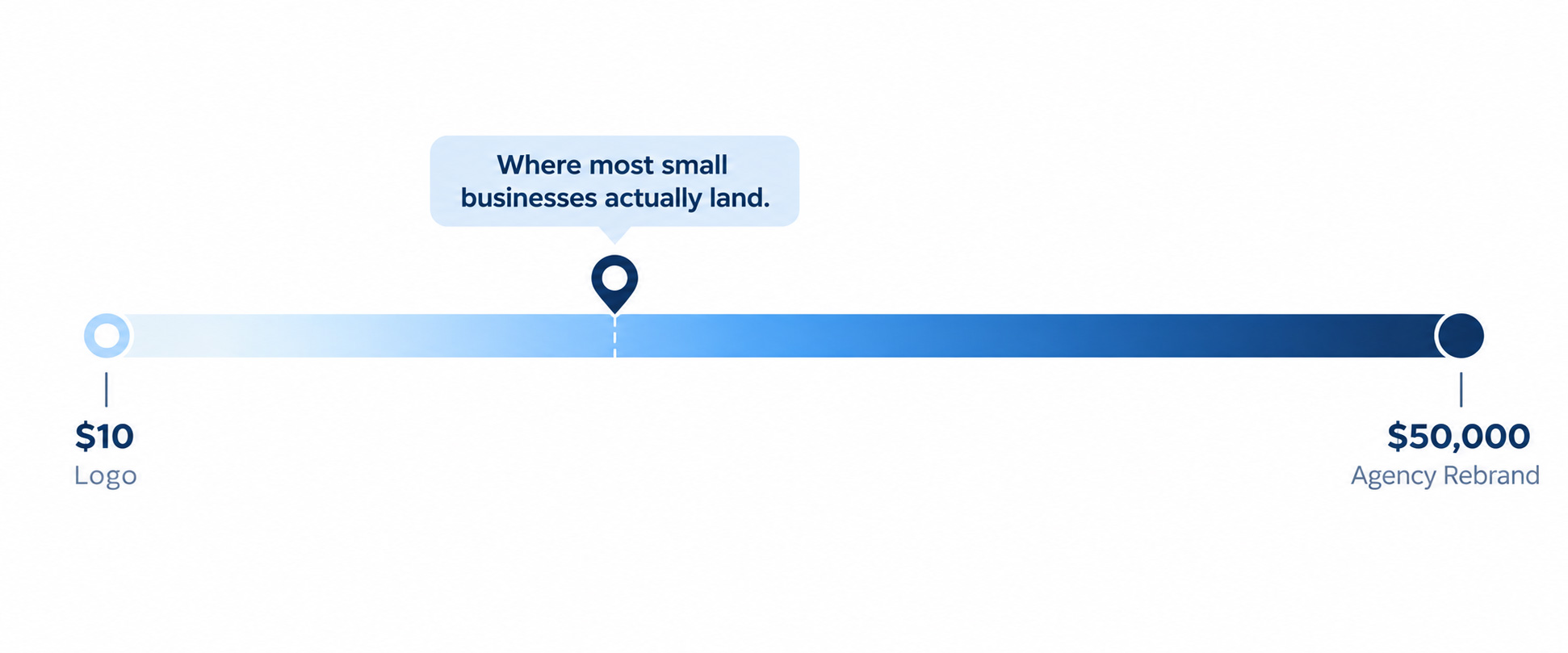
Before price makes sense, scope has to. A $10 logo and a full brand identity are not the same product, even though they get shopped for on the same page. A complete brand identity project usually includes:
- A logo, in the file formats you’ll actually need (web, print, social)
- A color palette and typography system, not just “the colors from the logo”
- Brand guidelines, so the look stays consistent no matter who’s designing your next flyer
- Core templates: business cards, social profiles, maybe a letterhead or menu
A $10 logo gives you the first item on that list. Nothing else. That’s not a scam, it’s just a different, much smaller product wearing the same name.
Realistic Price Tiers
Every business will find slightly different numbers, but the general shape holds across the industry.
Marketplace or template tools ($10 to $150). Fast and cheap, with almost no strategy behind it. Fine for a placeholder while you’re testing an idea, risky as a long-term identity.
Freelancers ($300 to $2,500). Wide range depending on experience. You get a real person thinking about your brand, but often without the guardrails, and sometimes without the guidelines document that keeps things consistent later.
Small studios and boutique agencies ($1,500 to $8,000). This is where most small and growing businesses actually land. You get strategy, a proper identity system, and someone who stays involved past the logo.
Large agencies ($15,000 and up). Built for national brands with big internal teams and multi-year rollouts. Rarely the right fit for a single-location business, no matter how appealing the name recognition is.
What Actually Moves the Number Within a Tier
Two businesses in the same tier can still pay very differently, based on a few real factors:
- How many deliverables are included. A logo alone costs less than a logo plus a full guidelines document plus templates.
- How many rounds of revision are built in. Unlimited revisions sound generous, but they usually mean the price, or the timeline, is padded to cover it.
- How much research happens before design starts. Skipping competitor research and audience thinking makes a project cheaper, and also makes it more likely you’ll want to redo it in two years.
- Your industry. A law firm or medical practice usually needs a more conservative, trust-first identity than a food or fitness brand, which changes how much strategic work goes in before any visuals appear.
How to Tell If a Price Is Actually Fair
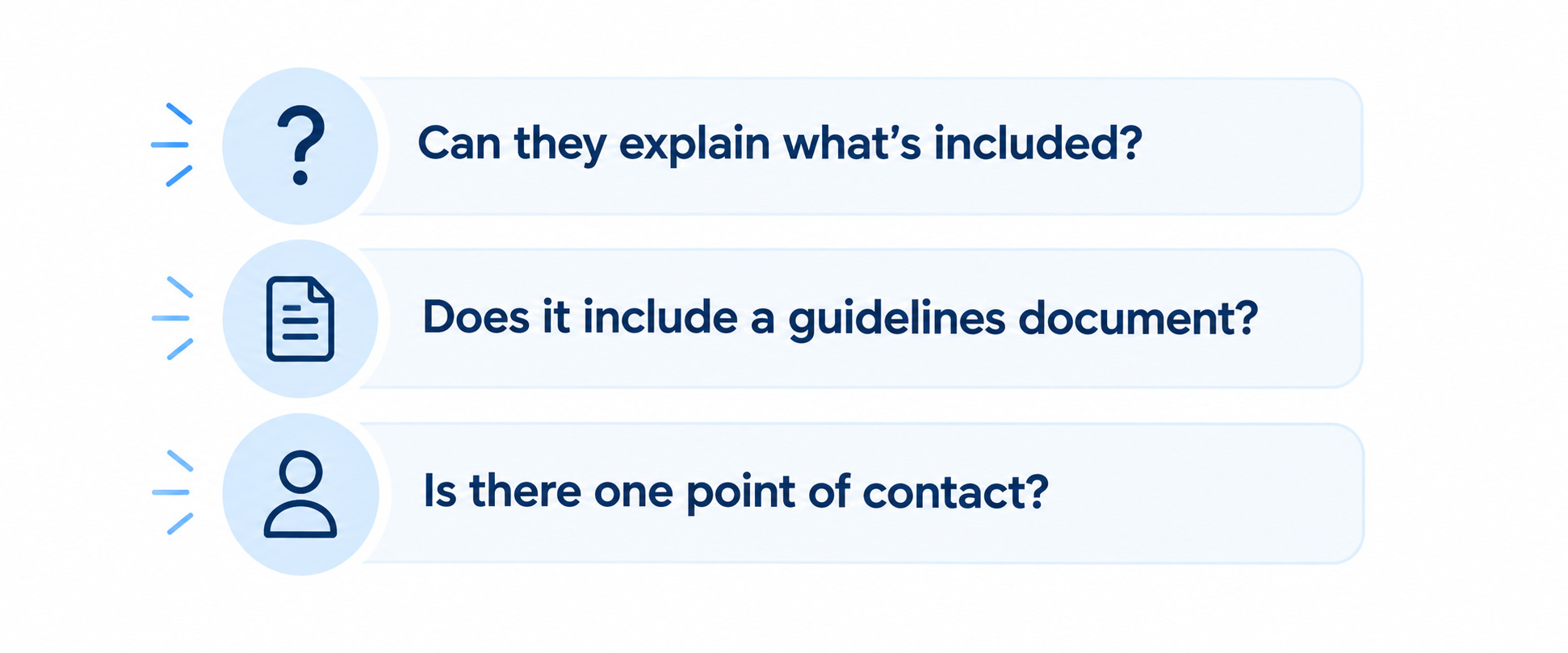
The number alone won’t tell you much. What will:
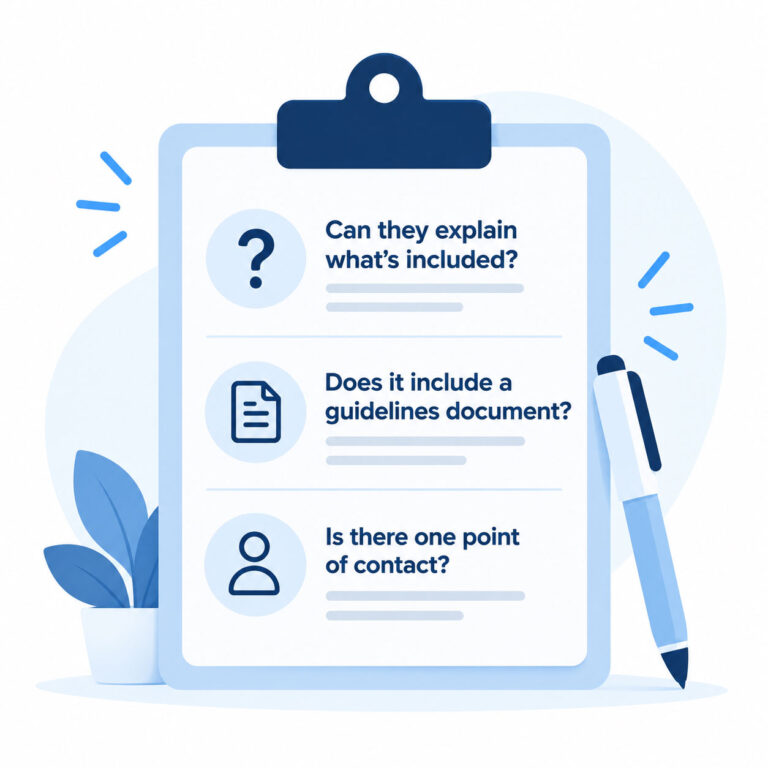
- Can they explain what’s included, in plain language, before you pay anything? If the answer is vague, the price is probably vague too.
- Does the price include a guidelines document? Without one, your “brand” is really just a folder of files nobody else knows how to use consistently.
- Is there a single point of contact, or will you be routed through account managers before reaching the person doing the actual work? More layers usually means more cost without more quality.
The Real Takeaway
Cheap branding isn’t automatically bad, and expensive branding isn’t automatically good. The number that matters isn’t the one on the invoice, it’s what that number is actually buying: strategy, consistency, and a system that still works for your business two years from now, not just a file you download once and never touch again.
This is exactly the kind of decision Harivens helps small businesses make clearly, an honest read on what your branding actually needs, not a number pulled from a price list. If you’re trying to figure out where your budget should actually go, book a consultation to talk through it.